
Texas Busted Booking Records
A booking photo gets taken during intake. The agency that handles the booking creates the photo on the spot. Around that image sits a fuller file. The file may hold the arresting agency's account of the incident, the booking event itself, any charge logged at intake, and details about where the person is being held. A county sheriff keeps part of that material. A city police department may hold another part of it. Neither office sees the whole picture. The picture changes once a state prison sentence enters the mix. The Texas Department of Criminal Justice, or TDCJ, then keeps its own offender profile. TDCJ's profile stays separate from the local file. Texas runs no single statewide page that merges them.
A booking photo answers one small question. The court file answers the rest.
How Texas Arrests Become Records
Texas publishes no single booking-photo feed. An arrest often passes through several hands. A city police department may make the stop, then hand the person to the county jail for booking. A county or district clerk opens the case file next, and state custody follows if a prison sentence is imposed. Every handoff creates a separate record. Each stage may use a new name, number, or portal. The arresting agency is not always the jail. That split explains many empty searches. A county custody list will miss someone who was released, transferred, cited without booking, or booked elsewhere. A court portal can show a case with no photograph at all. Start by pinning down which agency made the arrest and which facility accepted the booking.
Texas Busted Mugshot Law
Texas rests public access on Government Code Chapter 552. That law, the Texas Public Information Act, lets anyone request existing government records unless an exception applies. A booking image can qualify. Even so, no sheriff is forced to post photos online. Agencies may withhold material when release could interfere with an investigation, while basic information about an arrested person follows its own separate rule. What comes out turns on the record and the case.
Business and Commerce Code Chapter 109 is far narrower. It reaches certain businesses that publish criminal-record information drawn from public-information or DPS records and use specified paid removal or correction practices. Covered publishers must keep listings complete and accurate. A free correction route is also required, along with rules for juvenile records and notices of expunction or nondisclosure. The statute carves out defined exceptions, including many news outlets. None of it bans booking photos statewide.
The current Chapter 109 text folds arrest information, charges, dispositions, and arrest-linked photographs into its definitions. Lawmakers added the chapter in 2013. Inaccurate listings and paid corrections drove the concern. Its scope still turns on the record's source, the publisher, the fee practice, accuracy, and the person's legal status.
The two laws answer different questions. The Texas Public Information Act governs access to government-held information, while Chapter 109 sets duties for covered publishers. Juvenile records get separate protection in Texas. Chapter 55A offers expunction procedures for eligible records. A court order can change what stays public, yet it cannot erase every online copy by itself.
The official Chapter 109 text spells out the definitions and correction rules for covered publishers.
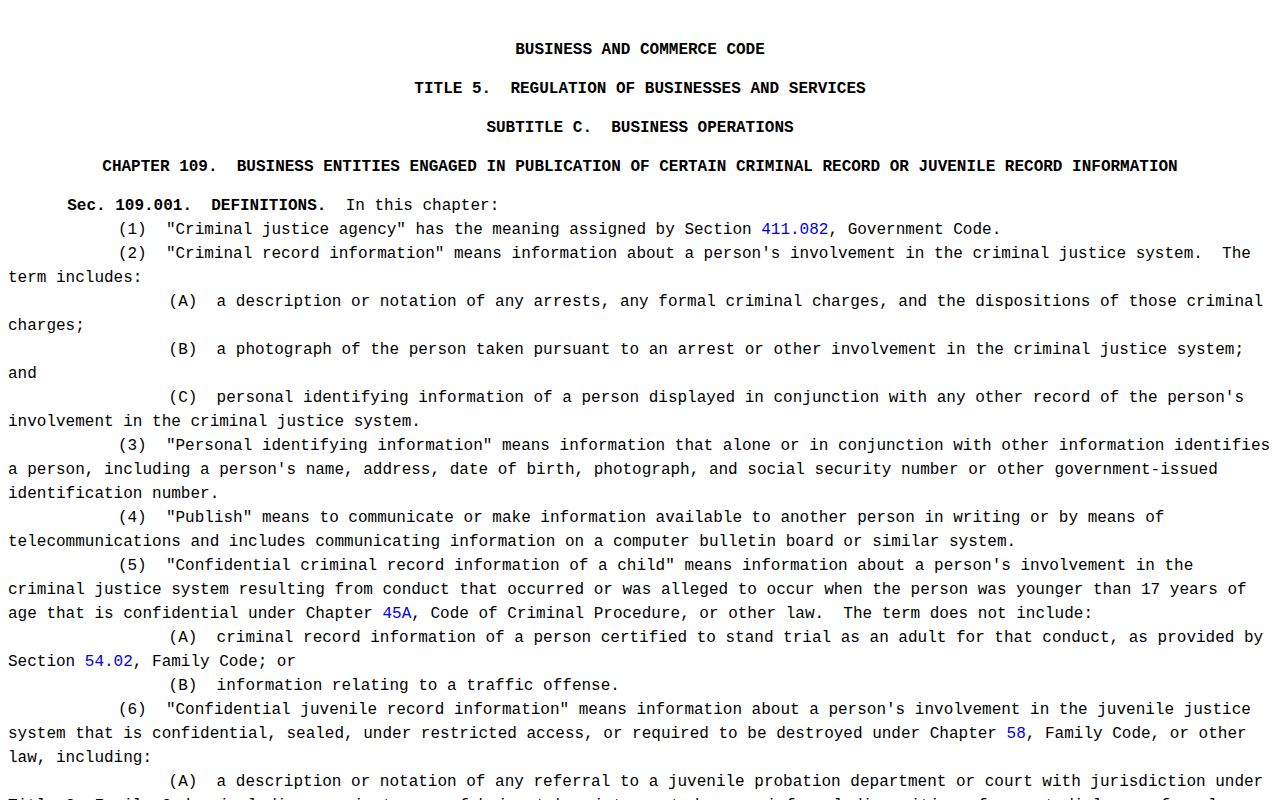
Chapter 109 sets a narrow accuracy and removal framework. It is no blanket order to hide Texas booking photos.
Texas Booking Record Fields
Texas has no uniform statewide booking sheet. Every county formats its own. A local jail may show less online than its records unit keeps, or more. Common jail fields differ from the TDCJ profile. A blank field on a public page does not mean the agency never recorded it.
| Record item | What it can show |
|---|---|
| Name and identifiers | The name entered at booking, and where the custodian releases them, a booking or agency number. |
| Arrest and booking dates | When the arrest or jail intake was recorded. A portal may update after the event. |
| Arresting agency and case | The agency and case details tied to the intake. The arresting agency may differ from the jail custodian. |
| Charge as booked | The charge entered at intake, which can change and is not a conviction. |
| Bond and custody status | Some county systems show bond or a current custody entry. The roster is a snapshot, not a full case file. |
| Booking photograph | May appear in a local detail view, be available only by request, or not be released under a local rule or exception. |
| Court disposition | The case outcome belongs to the court record and may not be reflected in a jail entry. |
| TDCJ profile | State-custody or supervision identifiers and details. The public search does not provide a booking-photo field. |
Midland County's current detainee table lists offense, arrest date, bond, disposition, and custody details. One county's format is not a statewide template. Photos may or may not appear there. Ask for an existing item by name, date, county, and case or booking number when known.
Request Texas Booking Photos
Ask the office that holds the record. A city or county booking request starts with that sheriff or police public-information officer. TDCJ takes identification-photo requests through its own public-information route. The agency may review exemptions, redact details, quote a copy charge, or ask for more information, and Texas sets no single photo fee or fixed response time for these requests.
- Identify the arresting agency and the jail or other body that accepted the booking. Use the county directory if the county is known.
- Write down the name as recorded, approximate arrest or booking date, county, and booking or case number if available.
- Ask for existing records by name: the booking photo, booking sheet, arrest report, charge list, release notation, and any disposition record held by that agency.
- Send the request in writing to the agency’s public-information contact, and describe existing records rather than asking the office to answer a research question.
- For a state-prison identification image, submit a separate written request to TDCJ with the TDCJ number when known. TDCJ says inmate photos are not provided through its public email lookup.
Ask for electronic copies when that format works. If the office withholds material, request its reasons. The request seeks existing records only. It cannot build a statewide roster or settle anyone's guilt.
Retention and publication are separate questions. Texas State Library schedules set minimum retention periods for local records. A county portal may drop an entry sooner. Expunction can require destruction or return of eligible arrest records, while nondisclosure seals material from ordinary public access but lets authorized agencies keep it. Anyone holding an order should contact the custodian and every publisher with a copy.
Find Texas Busted Mugshots
A good search follows the record itself. Start with the arresting agency, move to the current custodian, then the court. Assume nothing about a photo being online. Trace a person's Texas booking record with these steps, and confirm every result against the source that created it.
- Pin down the county and city where the arrest took place, plus the approximate date. If an arrest may have crossed county lines, search the arresting agency and the receiving jail.
- Open that county’s official custody or jail-record page. Check whether it covers current detainees, recent bookings, or both, and read its update note.
- If the person is not listed, ask the sheriff or police records unit for the existing booking record and photo. A release or transfer can remove a person from a current roster.
- Search the county or district clerk and the statewide court portal for the case and later disposition. A court result is not a live custody result.
- For a state sentence or supervision record, use TDCJ’s offender search. For federal or immigration custody, use the separate federal locator that matches that custody system.
County-level detail lives in the Texas County Directory. Local jail names, records paths, and city arrest patterns all differ from one county site to the next. A matching name is only a lead. Compare identifiers and dates, and let the originating office or court settle the question.
County Busted Rosters and Feeds
Texas counties share no single roster design. Some post a current custody list. Others offer a recent-magistrate or booking interface, and a few require a written request. One roster may list charges without photos while another portal hides an image inside a detail view. None of this promises every county posts every booking.
| County example | Official route found | What the route does not promise |
|---|---|---|
| Anderson | Tyler/Odyssey public access has Jail Records and Jail Bond Records. | Data can lag through the previous business day; no universal photo guarantee was found. |
| Bexar | Central Magistrate Search and Jail Activity Reports cover recent custody activity. | The window is limited, and the county does not promise a photo for each record. |
| Midland | Current Detainees table, with a separate media booking-photo request path. | The public detainee table was not verified as a photo roster; request eligibility can be limited. |
| Travis | Time in Custody is separate from police booking-photo and incarceration-record routes. | A custody page is not a complete same-day arrest feed. |
The Anderson County public portal splits its searches into categories. Jail records and bond records sit under separate headings on the county access page.
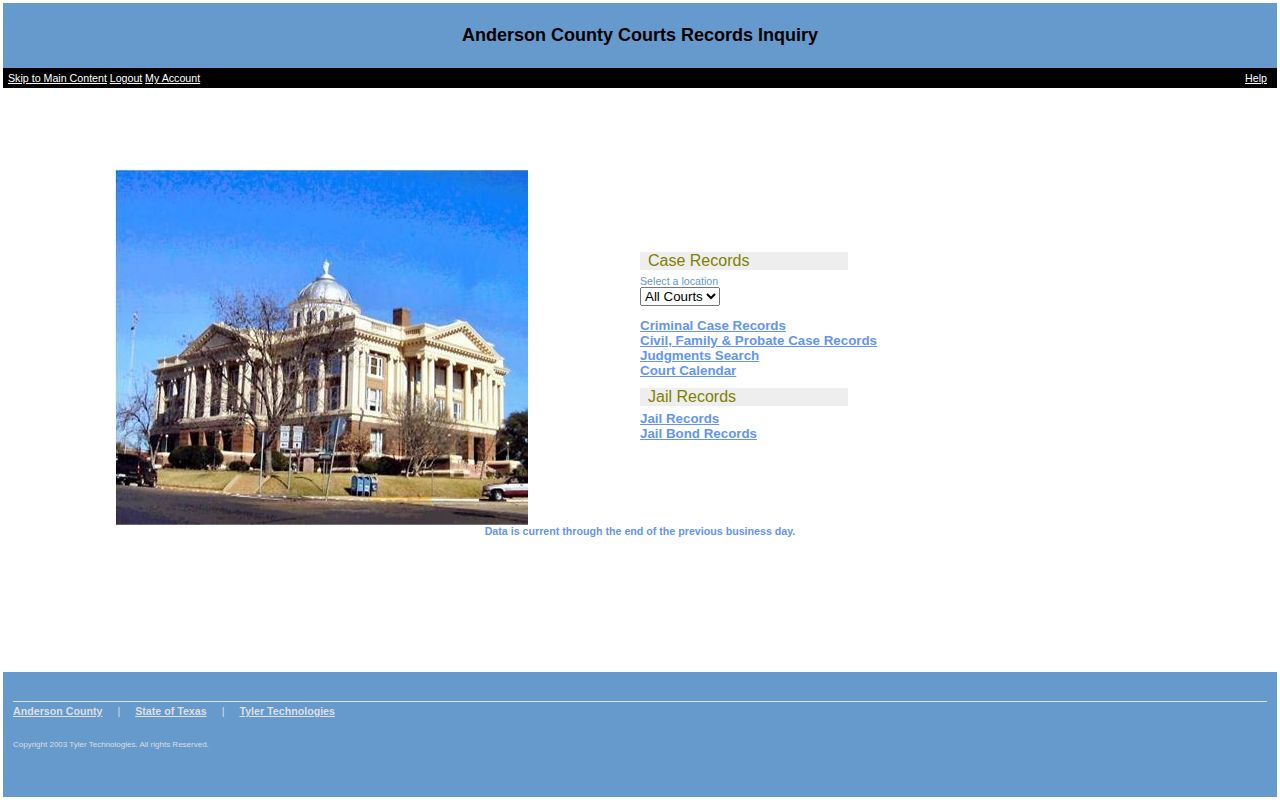
Check the portal's date language first. Anderson's prior-business-day notice shows why an entry may not be current yet.
Texas Busted Feeds Have Different Clocks
"Recent" runs on no single statewide clock. Anderson's portal carries data through the end of the previous business day. Bexar's magistrate and activity routes cover a limited recent window. Travis separates current custody from booking-photo and incarceration-record paths. Midland's public detainee table is a custody list, not a photo feed. A delay can come from a portal schedule. Case processing or a county's own list definition can slow things too.
In a large county, one arrest can pass through a city police system. It may also move through a county jail. A court portal can hold it too. Each updates on its own schedule. Smaller counties may have no public roster at all. Some people are booked at a receiving jail outside the arresting county. Sheriff and police apps offer tips or alerts. No statewide app serves as a booking-photo database.
The Bexar County Central Magistrate Search is a recent custody and magistrate interface. It is not a statewide feed and promises no photograph.
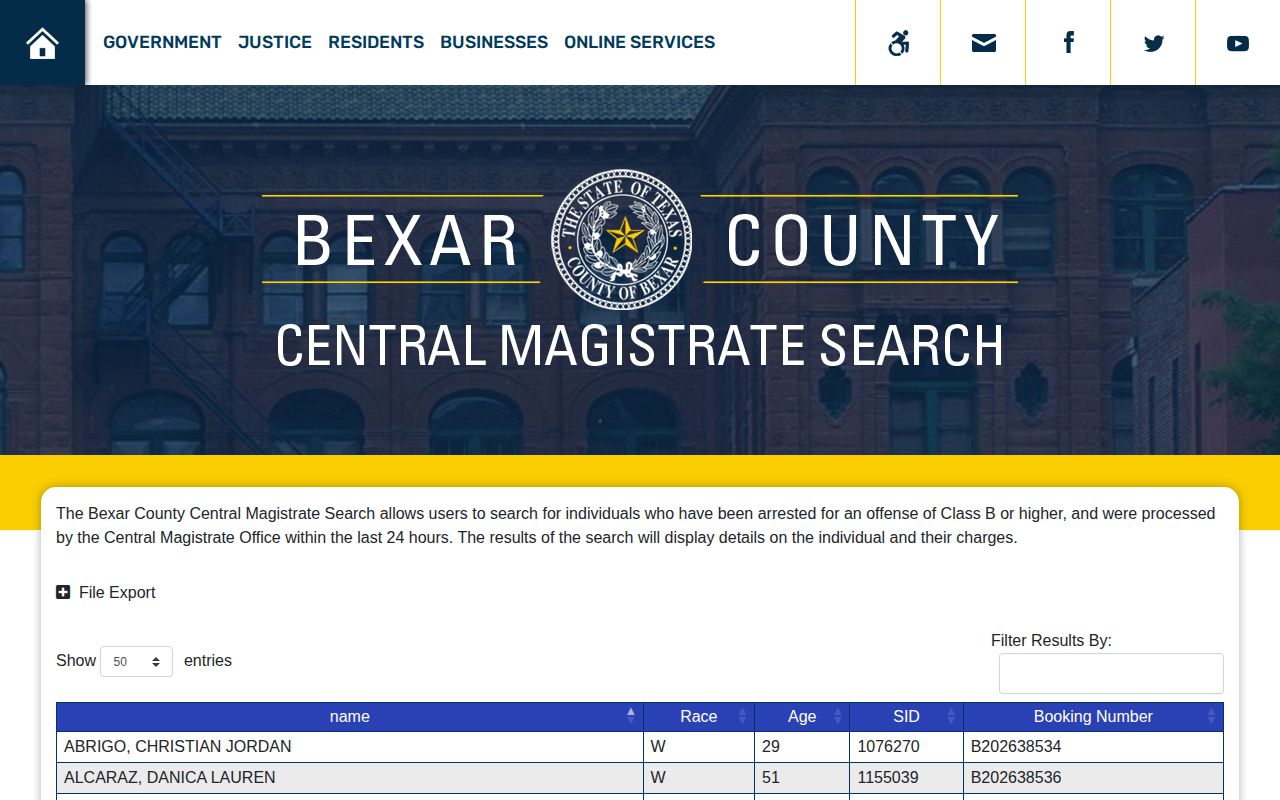
Read each county's update note. If the online range stops short of the date you need, switch to a records request.
Texas Busted Wanted Lists and Warrant Checks
Texas runs several distinct wanted systems. DPS keeps the Texas 10 Most Wanted list. TDCJ publishes a parole-absconder tip route, and federal fugitive notices belong to the relevant U.S. Marshals district. They do not form one statewide warrant database. A parole-absconder entry describes supervision status.
For a county warrant question, start with the court or sheriff serving that county. Ask which official check applies. Texas counties use different tools, and access may depend on the warrant type or court. Compare identity details and confirm current status with the issuing office. Never approach a wanted person yourself. The statewide Most Wanted Fugitives page lays out official list types, tip routes, and safe ways to resolve a warrant question.
Match Texas Court Records
A booking charge is just the opening line. It can change once a case moves into court. To follow it, start with the county or district clerk. From there, the state's electronic portal, re:SearchTX, opens case and hearing searches across Texas. Filters let you narrow by party, attorney, court, county, and filing. Document access appears where the court has released them. Coverage is uneven, though. Not every county's criminal filings are there. The portal has nothing to do with jail feeds.
Pull the case number, court, filing date, and every name on the docket. Then read the later order or judgment. A booking entry never tells you the outcome. A missing case has several explanations. It may end without charges being filed. It can land in a municipal or justice court. Or it may transfer elsewhere. No result does not mean a dismissal. Ask the likely clerk or court directly when nothing shows up.
The Texas re:SearchTX entry page explains how to reach the public court-search system.
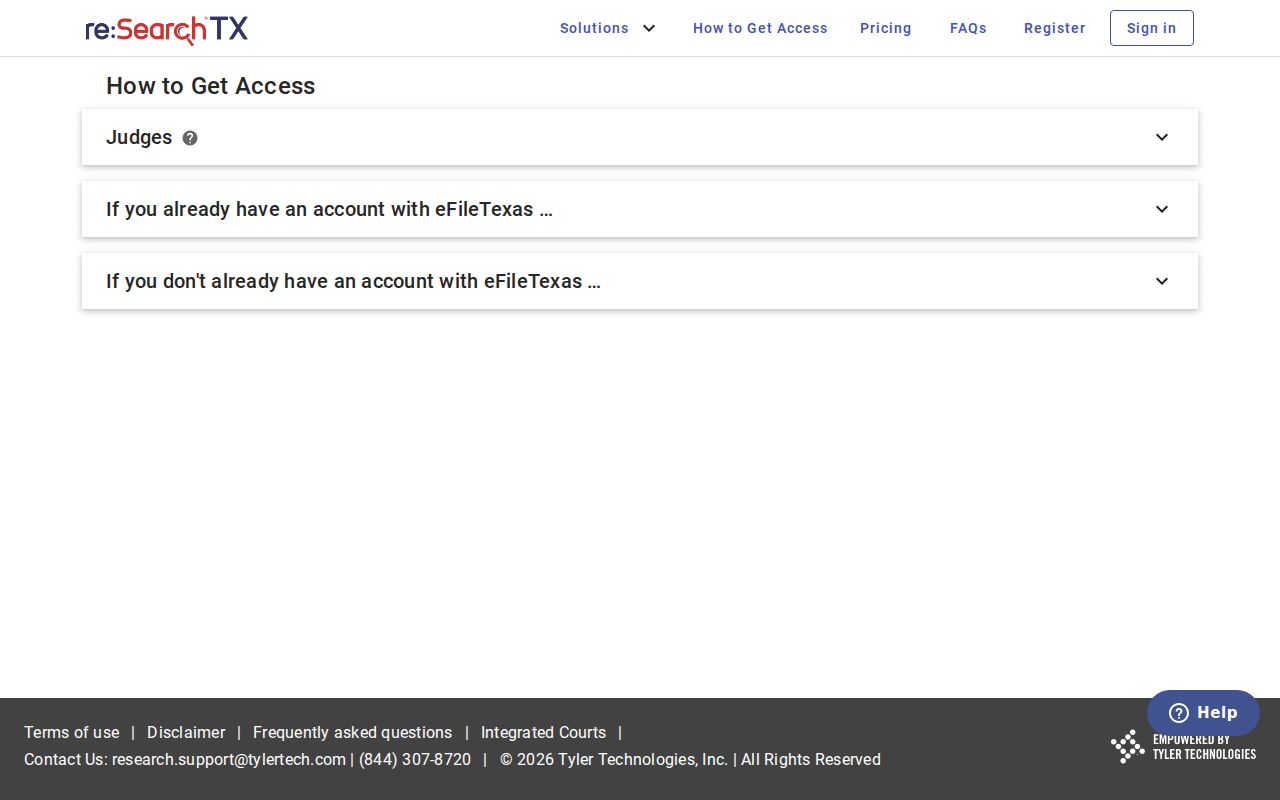
A court record can answer what the county roster will not. Still, a docket line is no substitute for a certified judgment.
- Booking
- The jail intake process after a person is accepted into custody.
- Arraignment
- A court hearing where a defendant is informed of the charge and enters a plea.
- Bond
- A court-set condition or amount tied to release while a case proceeds.
- Disposition
- The court’s recorded outcome in a case, such as dismissal, plea, or judgment.
- Expunction
- A legal process that can require eligible arrest records to be destroyed or returned.
TDCJ Search and Photo Limits
The Texas Department of Criminal Justice sits at a different layer than county booking. Its public IVSS search covers people held in TDCJ custody. It also reaches certain parole and mandatory-supervision records. A county arrest without a state sentence may never show up there. Search by name, TDCJ number, or SID. Have an older number instead? The former-number lookup handles that.
Know what the tool is. It is a text lookup for custody and supervision, not a photo gallery of offenders. TDCJ states that inmate photographs are not provided through its public email route. A specific departmental identification photo requires a separate written public-information request. That request is subject to agency review and exceptions. No schedule promises how often a profile image changes.
The official TDCJ offender search is the starting point for state custody and supervision status.
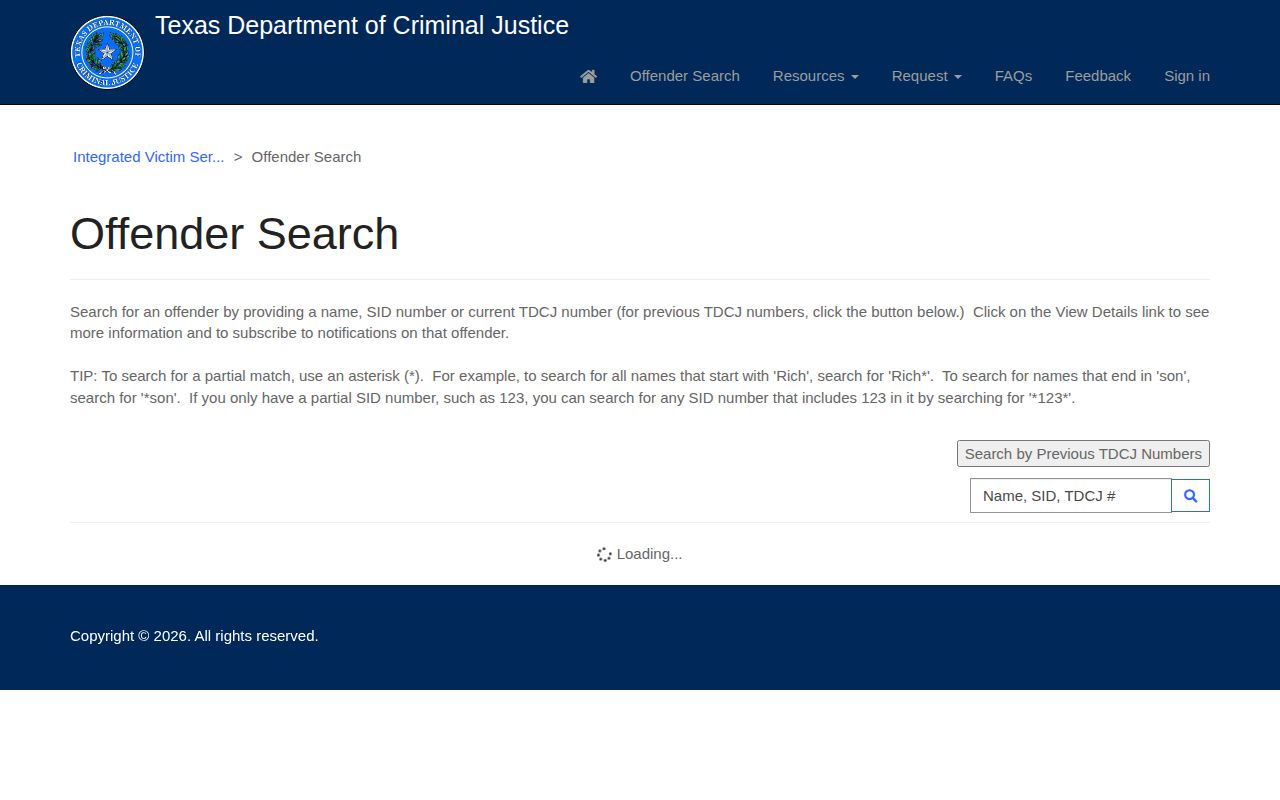
Search steps, profile fields, the former-number route, and photo-request limits sit on the statewide TDCJ mugshots page.
TDCJ's public information page lists its email records and repeats that inmate photographs are not provided that way.
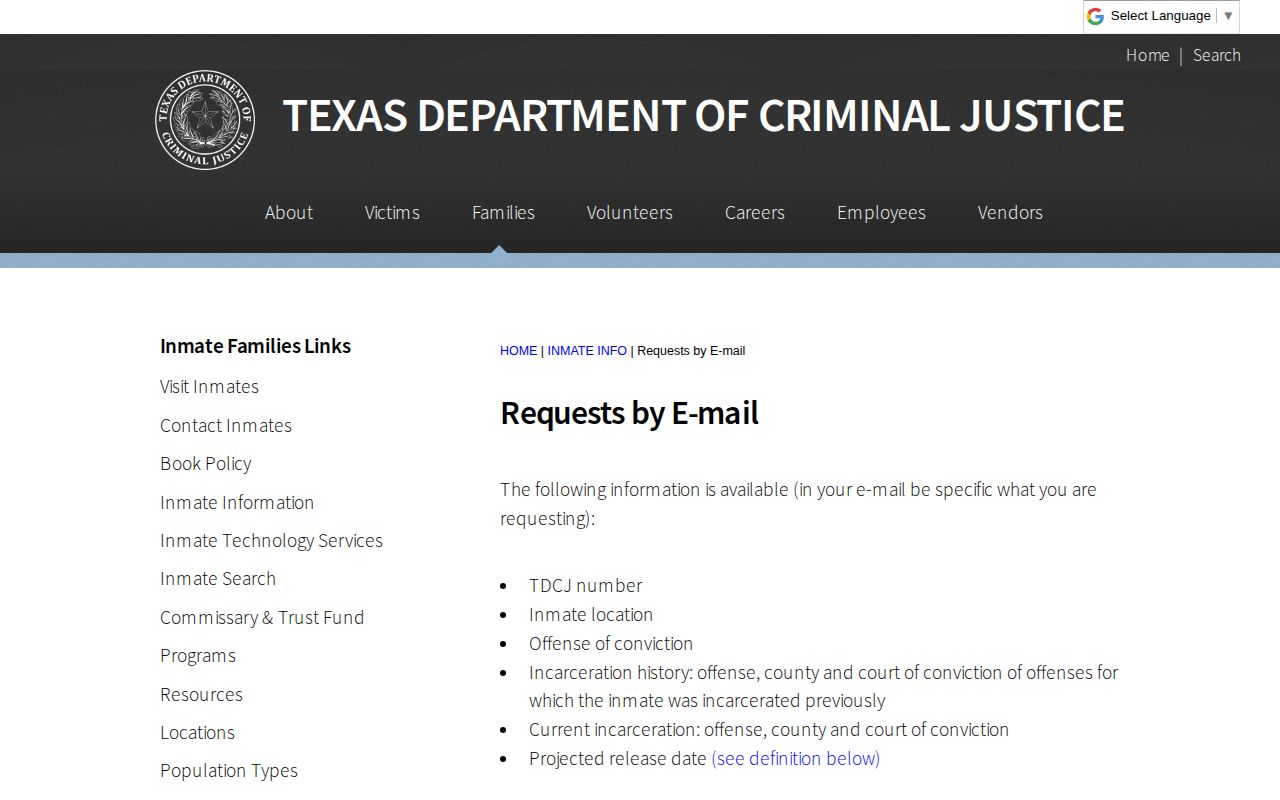
That statement covers only the public email lookup. A written PIA request triggers the separate review of a specific identification photo.
Busted, Released, or Sentenced
Pick your source by custody stage, not by the word mugshot. Someone can drop off the public roster. The booking record stays with the arresting agency. A state prison profile is a different animal from a county booking entry. Every source has limits. Confirm identity and date before trusting a match.
| Stage | Best record path | Photo expectation |
|---|---|---|
| Just booked | Arresting agency and receiving county jail’s recent booking or custody interface. | Local policy decides whether the roster displays a photo. |
| Still in county custody | Current detainee roster or a direct request to the jail records unit. | Some portals show images; others list text only or require a request. |
| Released or transferred | Ask the original booking agency for its retained record and photo. | Removal from the live roster does not prove the underlying record was destroyed. |
| State prison or supervision | TDCJ IVSS for custody/supervision facts; written request for a specific identification photo. | The public search has no photo field and TDCJ’s email route does not provide inmate photos. |
| Federal or immigration custody | BOP or ICE locator, as applicable; use the relevant federal court for case results. | The BOP locator has no public photo gallery; ICE is a location tool, not a photo source. |
Release does not close a case. Check the clerk's record for the outcome, then file a separate request if the original photo still matters.
Texas Federal Custody Sources
The Bureau of Prisons locator finds people in federal BOP custody by name or identification number. It is not a Texas county booking system. It offers no public inmate photos either. Federal charges complicate things further. A defendant may sit in a county contract facility or another setting before BOP custody begins, so a county roster answers a different question.
ICE runs its own tool, the Online Detainee Locator, for people in immigration detention. Enter the identifying details the system accepts. A public detainee photograph is not promised. A missing result can mean release, a transfer, or simply the wrong details; the person may not be in ICE custody at all. Treat federal court files and the custody locators as separate systems, never one.
The BOP inmate locator shows the federal search fields and custody scope.
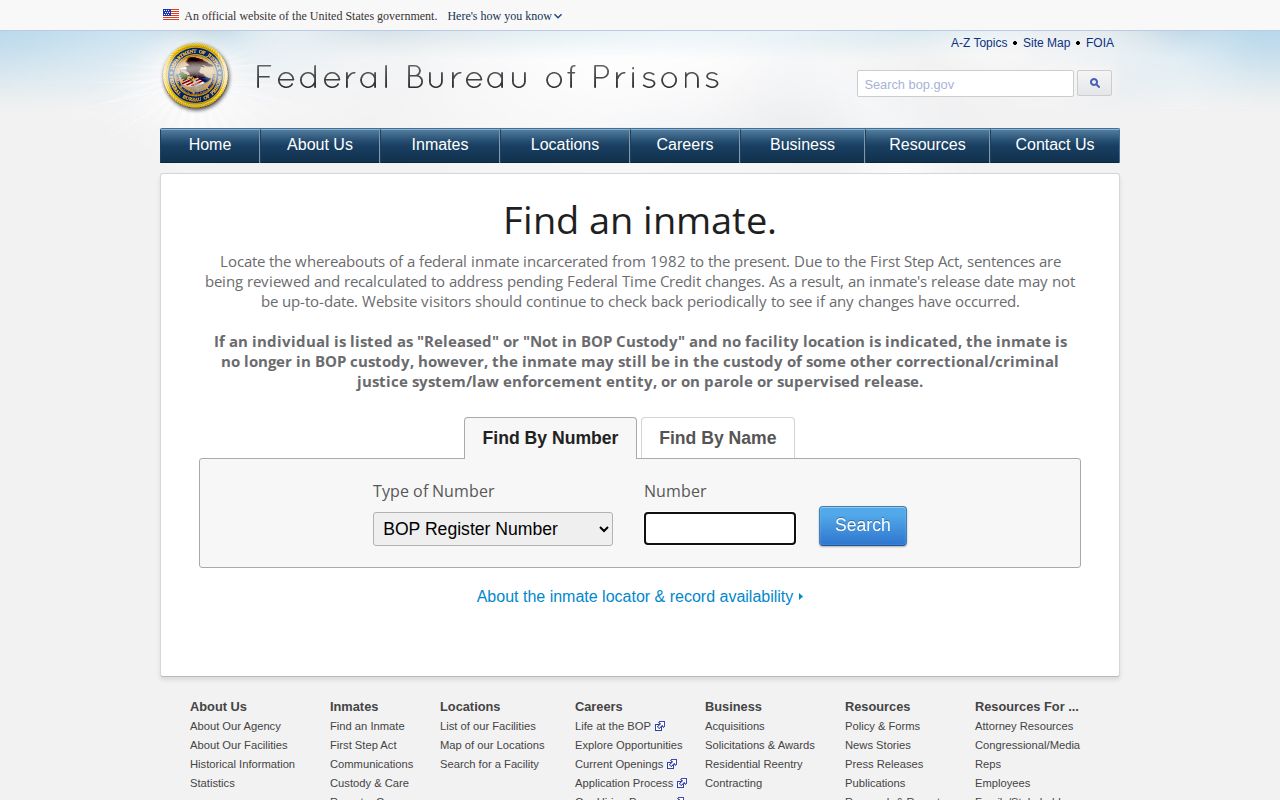
Use a federal locator for federal custody questions. Then check the court or agency for the case record and any later result.
For immigration custody, the official ICE detainee locator is the tool. A location result is not a Texas arrest record.
Texas Mugshot Indexes, Unofficial
Commercial sites organize copies of Texas booking material by state or county. They are secondary indexes, plain and simple. No government office runs them. One can keep showing a record after the county pulls it from its roster. A site might also skip a later disposition or display a photo on a different update clock. Whatever you find, take one more step. Verify the name, date, charge, and custody status with the sheriff, jail, or court that created the record.
The Busted Newspaper Texas index groups county pages; its records and photos remain unofficial copies.
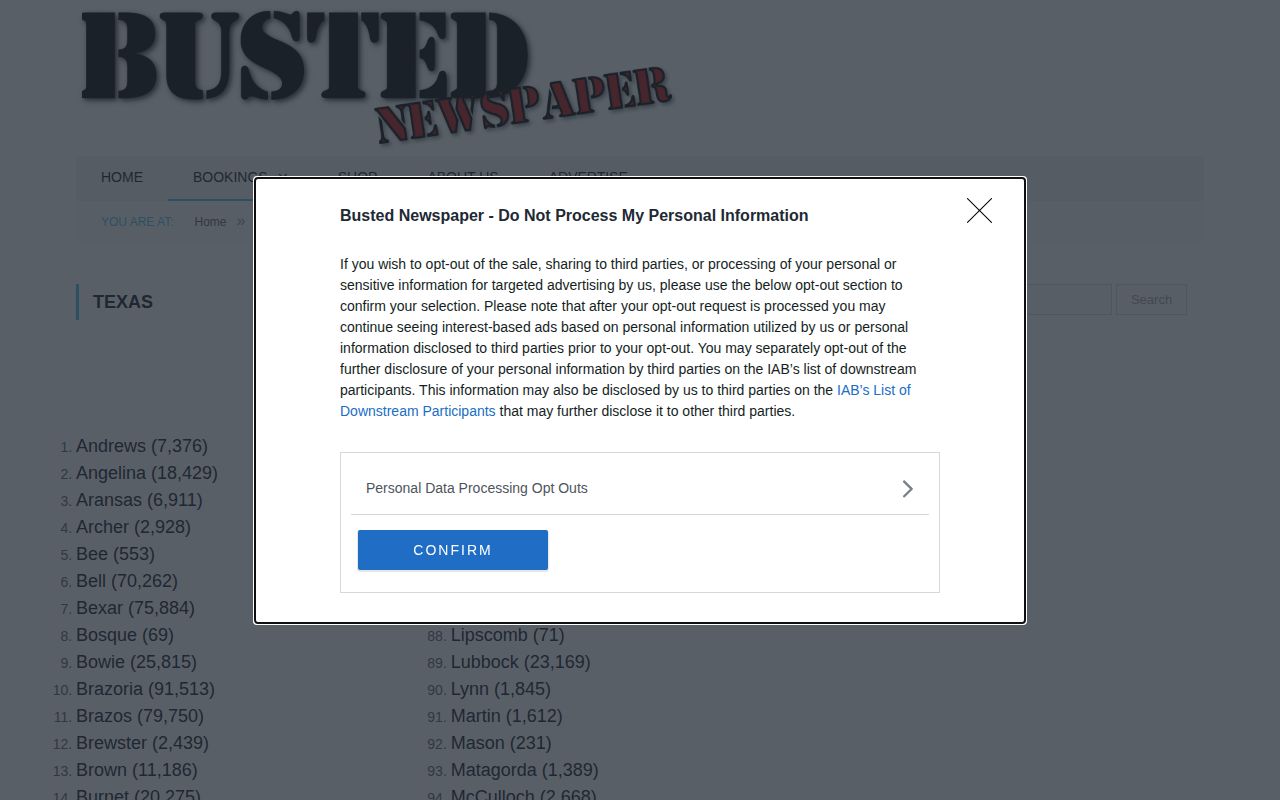
That page is a secondary county directory rather than an official Texas arrest feed.
RecentlyBooked's Texas index notes that county coverage varies and entries span only a recent, limited period.
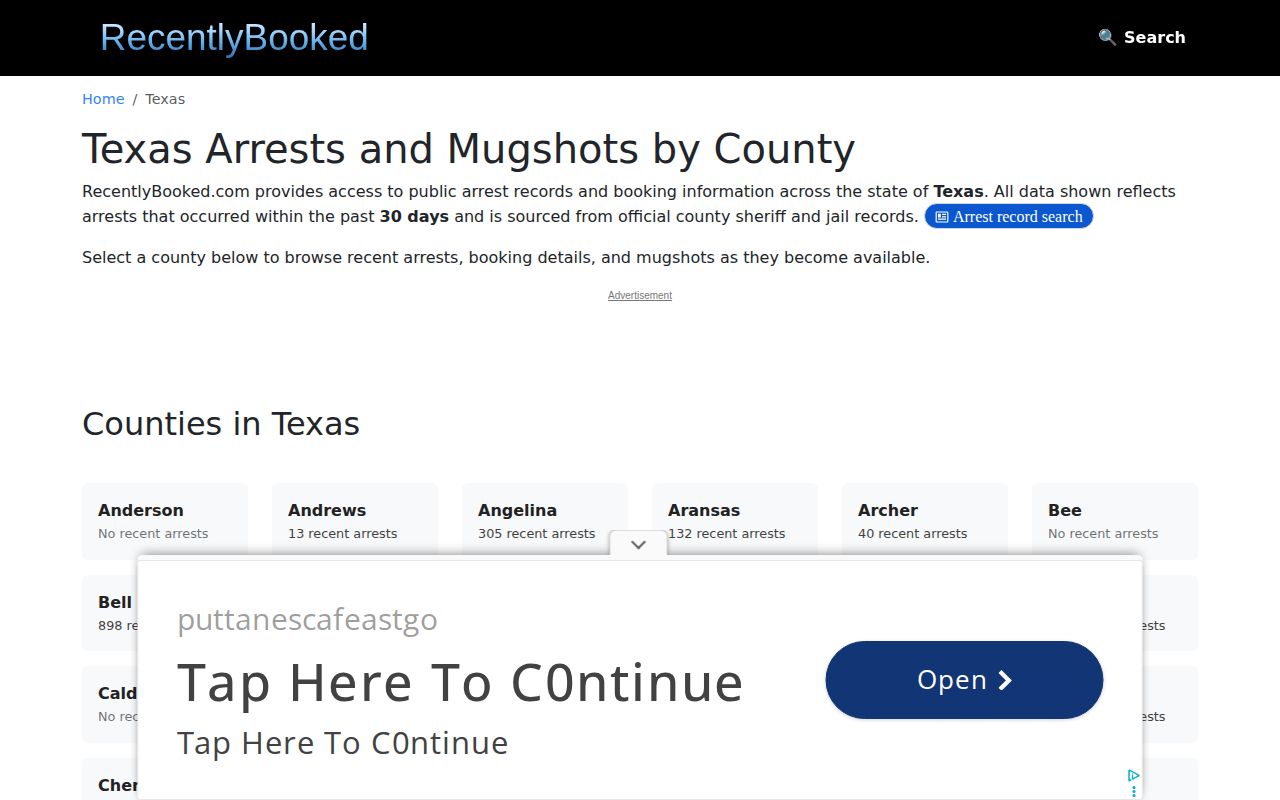
Mugshots.com’s Texas section works as an archive-style index. Arrests.org’s Texas page leans on county links and copied arrest entries. Neither site keeps official records. Mugshots.zone’s Fort Bend page shows how that network brands itself county by county. Mugshots.zone lists no single index covering all of Texas. Any hit from these indexes belongs to a specific county. Confirm it with the source office. Takedown routes differ from one publisher to the next. Some allow free requests for incorrect records or specified legal outcomes. Others post no clear Texas-wide policy. Use the publisher’s current request page. Cite the exact record URL. Attach any supporting order as well, and keep your own copy of the whole exchange. A truthful booking entry does not disappear just because you ask. And skip any intermediary promising guaranteed erasure for a fee.
Why Texas Busted Records Age Differently
An arrest record can drop off a portal yet live on in a court archive or a retention series somewhere else. Texas schedules set minimums only. They promise nothing about how long a roster stays online. Photos are not guaranteed to survive either. What actually endures depends on the agency's adopted schedule, any archival review, legal holds, and the physical state of the file itself. Older corrections material follows a different path. The Texas State Library and Archives Commission keeps convict ledgers, Department of Corrections photographs, and related collections, each with its own date ranges and access rules. You might work through a finding aid, a microfilm reel, a digital collection, or a written archive request. One caution matters here. Historical prison identification photographs should not be relabeled as county booking mugshots unless the source record itself establishes that context. A dead link proves nothing about destruction. Records often persist even after they vanish from view. For historical collection descriptions and the steps for making a request, see the Old Mugshots section.