
Where Old Texas Mugshots Survive
Hunting an old Texas mugshot? Start with the archives, not the local jail site. County rosters are built for current custody and recent bookings, and a name can drop off after release. TSLAC is the better first stop. The Texas State Library and Archives Commission lays out state corrections photographs and prison records in its online finding aids. These are archival holdings. They serve a different purpose than a live roster.
TSLAC's aids identify Department of Corrections photographs spanning roughly 1911 to 1985. Most of the material dates from 1965 to 1980. Access is restricted. A catalog entry is a description, not a promise of a copy. "Photograph" can mean a prison ID image, a portrait, or another corrections record. It might not be a booking shot. Labels need backup. Match the catalog note, the item description, and the access terms before trusting any image. The TSLAC records finding aids show how the state describes these collections and their limits, so read the collection note before requesting an image.
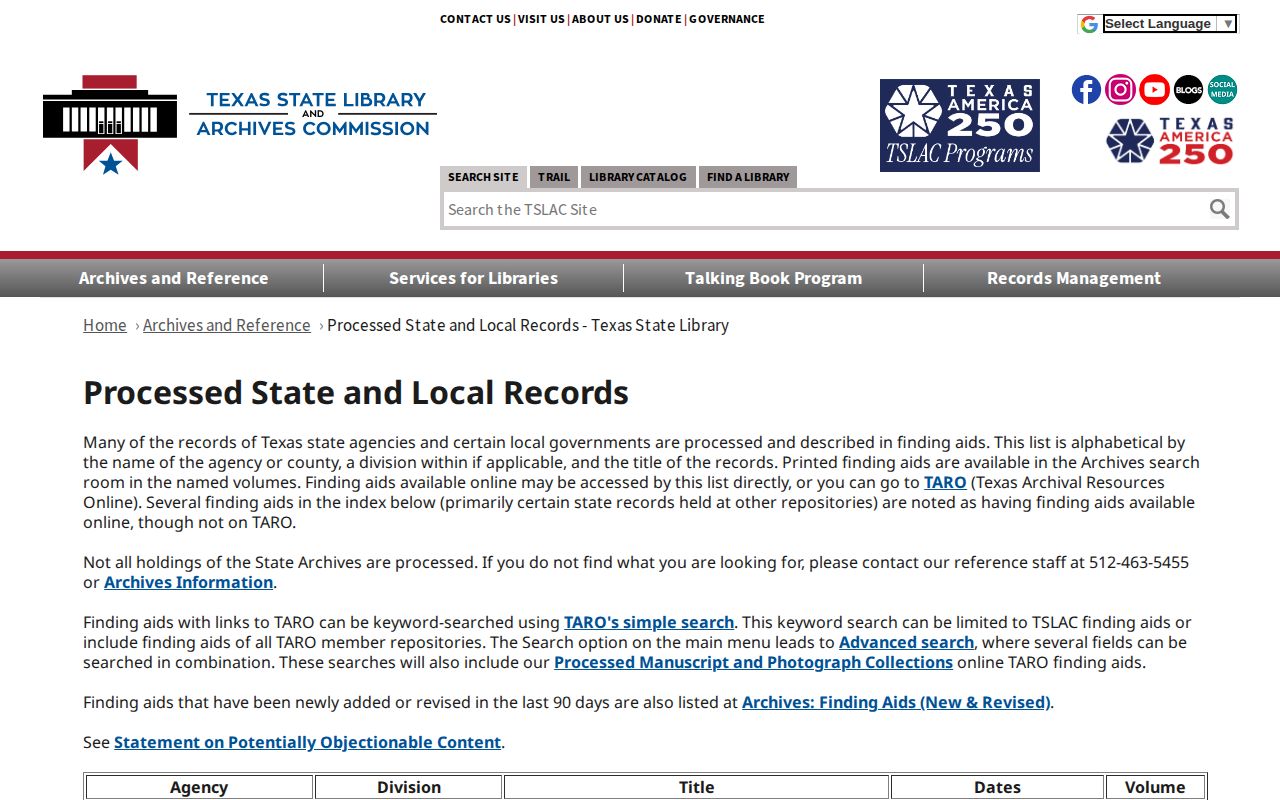
A finding aid works best as a funnel. Begin with a person, an institution, or a time period. Then narrow to one described collection. The reference may point to a box or folder instead of a scanned page. Some material sits in a digital collection. The rest need microfilm or a supervised visit. Keep the collection name and any restrictions with your notes, since a catalog result alone never shows whether copying is allowed.
Texas Archive Collection Guide
Old Texas arrest records follow more than one path. The right one depends on the target. A state prison image, a county jail entry, and a court's final record each live somewhere different. Keep those paths separate, and do not treat every historical photograph as a mugshot.
| Collection | Where and era | How to access |
|---|---|---|
| TDC convict records and ledgers | TSLAC; ledgers from 1849–1954, with indexes reaching later | Use the ledger guide, indexes, and microfilm details; ask the archive about fragile originals. |
| Texas Department of Corrections photographs | TSLAC finding aids; about 1911–1985, bulk about 1965–1980 | Check the restriction and related collection notes, then ask Archives Information about access. |
| Prints and photographs | TSLAC; a broad collection of more than 750,000 items | Search the catalog and linked digital collections; confirm what the image depicts. |
| County jail and offense records | County custodian; dates and retention depend on record type and local schedule | Ask the sheriff or county records office whether the file remains, transferred, or was destroyed. |
| Criminal court files | County, district, justice, municipal, or appellate clerk | Search available court records, then contact the clerk that held the case. |
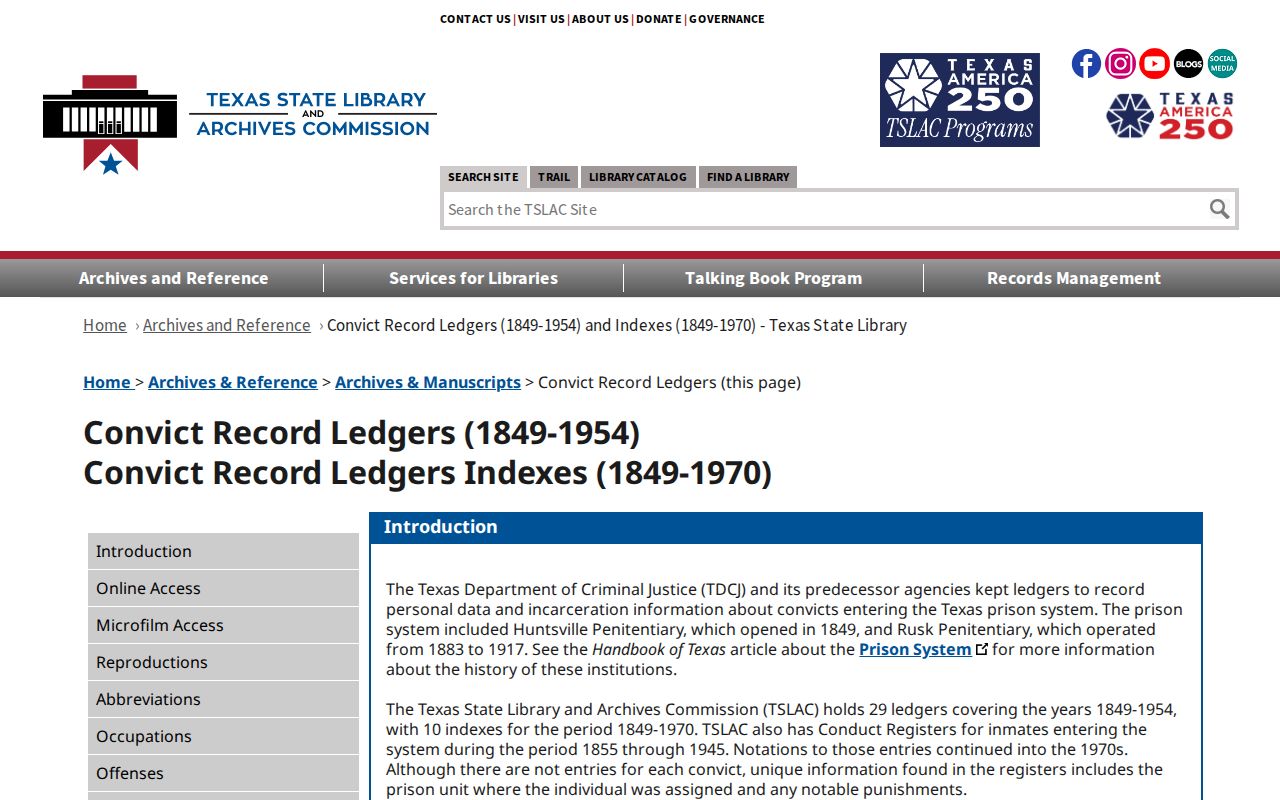
Prison-era Texas records run through ledgers. The TSLAC convict-record ledger guide explains the date range, the indexes, and the microfilm path. Original ledgers can be fragile. The guide may send you to a safer copy instead of an open volume. A ledger entry helps identify a person or a prison record. It is not a booking photo. The guide also links to related Department of Corrections records and the Texas Digital Archive. That may differ from the printed ledger. Note each item's title and date span before comparing names. A shared name alone cannot tie an archival photograph to a county arrest. Match the record description instead. Add the institution, the date, and identifying details.
Texas County Record Retention
TSLAC’s Local Schedule PS covers local government records for law enforcement and public safety. It includes offense-investigation records that may contain mugshot photographs, jail registers, incarceration and booking-in or booking-out records, and juvenile case files. The retention periods differ by record type and offense. Some jail registers are permanent; some booking or incarceration records are kept beyond release; offense files can have minimum periods from months to decades.
Those are minimum retention rules, not a statewide promise that each county keeps the same image for the same length of time. An adopted local schedule, a legal hold, an archival review, the agency’s destruction record, and the physical state of the file all affect what remains. TSLAC’s retention schedule overview explains that an agency’s own schedule and archival review matter. Ask the actual custodian whether the record was retained, transferred, or destroyed under an approved schedule.
A web page has a different life from the record behind it. A jail portal may be replaced even when the county still holds a booking entry. A copied image may remain online after the original agency removes its public listing. Neither event proves that the source file was destroyed or that a copy is accurate. For older case outcomes, identify the right clerk first. A criminal case may sit with a county or district clerk, while a justice, municipal, or appellate court may hold a different part of the history. The statewide re:SearchTX access route can help locate electronic court records, but coverage varies by court and case. If an old result is missing, ask the originating clerk for a historical file, docket, judgment, indictment, order, or exhibit. A court file can establish a disposition without proving that a photo attached to a separate record is a booking image.
An empty court-search result is not the end. The matter may be local. Some filings live in courts the portal never covers. Older cases can rest with a county or district clerk, a justice or municipal court, or an appellate clerk. Ask for the case docket and the final order. Then request any exhibits as a separate item. A docket can document the result without including the arrest photo. Photos rarely travel with it.
Note: A missing online result can reflect the portal's coverage or a changed web page, not the loss of the official record.
Requesting Texas Archival Records
TSLAC takes public-information requests for its own records. It also handles requests for records of other entities held in the State Archives. Each collection needs its own form. Search before you send. The finding aids and the TARO catalog, short for Texas Archival Resources Online, help a request name a collection, series, box and folder, ledger volume, or digital object when those details exist.
- Describe the target. Gather the person’s name and alternate name, the county or institution, an approximate year, and any case or prison number. Say whether the request is for a booking photo, a prison identification image, a jail-register entry, or a court record.
- Find the collection reference. Search TSLAC’s finding aids and TARO for terms such as “Texas Department of Corrections photographs,” “convict records,” “prison identification,” or the institution name. Record the collection identifier and box, folder, volume, or item number if listed.
- Check access before ordering. Ask Archives Information whether the item is open, restricted, digitized, on microfilm, or available only in the search room. A restriction may prevent access even when the catalog shows that a record exists.
- Send a focused request. Use TSLAC’s public-information request process and submit one form for each collection. Ask for a digital scan or supervised viewing option, and state that a photo should be identified by its own record description, not assumed to be a booking image.
- Confirm cost and timing. TSLAC sets no single fee or response time for every archival image request. Reproduction rights, conservation work, and staff research can vary, so ask for a quote and estimate before expecting a copy.
The TSLAC request page starts a state-archive request. For collections, Archives Information lists archinfo@tsl.texas.gov and 512-463-5455. A county jail record belongs with the county that holds it, not TSLAC, unless the file was transferred to the State Archives.
What Texas Records Still Survive
A recent Texas arrest starts with the current custodian. That usually means a county jail or sheriff for booking and custody records. The arresting agency keeps its own file. The record types differ. The statewide Texas record search overview explains how. Use the County Directory to reach a county's local system when the case began there. Older records take more digging. You may need a clerk, an agency records unit, TSLAC, or several requests.
Before calling an old photograph gone, ask two questions. Which record series would have held it, and what happened under that custodian's schedule? A permanent jail register may outlast an individual image. A court judgment may remain after the booking page is gone. An archived image may show prison ID rather than county intake. Keep the record type and the source description with any result.
Texas archival research works like a chain. Identify the arresting county and likely custodian. Check the court record for the outcome. Review the retention schedule. Then search the state archive if the material was transferred. A publisher's copy without a matching agency record is not verified. Ask for the source, then compare name, date, and case details against official records.