
Texas Busted Mugshots and TDCJ Records
The Texas Department of Criminal Justice runs the state prison system and community supervision. Its IVSS lookup covers two things. It finds people in TDCJ custody. It also lists people under parole or mandatory supervision. A county arrest that never led to a state sentence may not appear there at all. TDCJ is not a combined index of city arrests, county bookings, jail releases, or booking photos.
That gap matters when a name shows in a county booking but not in TDCJ. The county sheriff or jail logs the local booking. The court clerk keeps the filed case and its later orders. TDCJ matters only once a person enters state custody or holds a supervision record. Each record answers a different question. The arresting agency, the booking jail, the court, and the corrections office may not be the same office.
A TDCJ result is not a fresh arrest notice. Treat it as a state custody or supervision record. Note the date of your search. Then check the court docket for the case outcome. The County Directory routes readers to Texas county record sources covering the local booking side. County arrest photos live on that local side, not in the state lookup.
Search TDCJ Mugshots by Name or Number
The official IVSS Offender Search takes a name, an SID, or a current TDCJ number. An SID is a state identification number. It distinguishes one person in criminal-justice records. Exact numbers narrow results fast. A name alone can pull up several people, and TDCJ's own screen points anyone with a former number to a separate search route.
- Open the IVSS offender search and select the search field that matches the information available.
- Enter the full name or identifier. For a partial name or SID, TDCJ says an asterisk can stand in for missing characters.
- Use the previous-number search when the known identifier is an old TDCJ number. Do not assume the current-number field covers it.
- Review the returned name and identifier, then choose “View Details” for custody or supervision information.
- Compare more than a name before treating a result as a match. Follow a case to the relevant court record for the disposition.
The official TDCJ search screen explains the search types. It points users to "View Details" for more information, and the tool is a text search rather than a public photo roster.
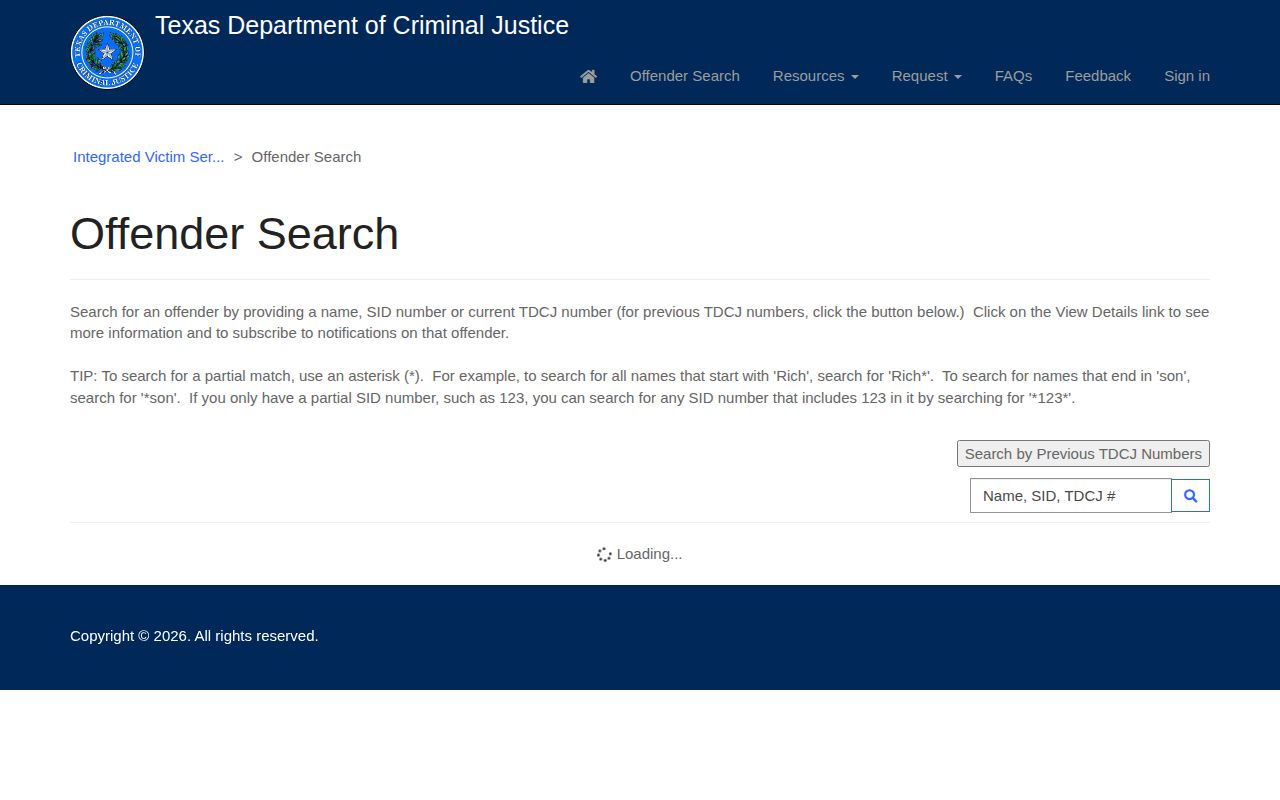
The screen allows partial matches with an asterisk. A link covers former TDCJ numbers. Both help when a name has several spellings or the only number you have is old. Neither removes the need to verify identity. A common name, a missing middle name, or a mistyped number can send you to a stranger's record.
What the TDCJ Lookup Tells You
Read the result for the fields TDCJ names in its public information materials, not as a complete case file. The route can supply a TDCJ number and location. Conviction and incarceration history may appear. So can the current conviction county and court, plus projected release information and similar custody details. What you see depends on the record itself.
| Record detail | What it can help confirm |
|---|---|
| Name and TDCJ or SID number | Whether the result may refer to the person being sought; compare identifiers rather than name alone. |
| Location and custody status | Whether the person is in a listed TDCJ setting or whether the record describes supervision. |
| Conviction history | The conviction information TDCJ maintains, which should be read alongside the court file. |
| County and court | The jurisdiction and court tied to the current conviction information. |
| Projected release information | A projected date reported by TDCJ, not a promise of a release on that exact day. |
IVSS is no booking-photo search. It is no warrant search either. It skips arrests, county charges, and court events. A projected release date is an agency estimate that shifts as the record changes. When a disposition matters, pull the court docket and order the filed judgment from the clerk if the online record runs thin.
A booking entry marks an arrest and intake. A disposition is the court's later action, such as dismissal, a plea, or a judgment. The booking charge and the outcome can differ. TDCJ search helps trace state custody after a conviction. It cannot explain what happened to a separate local charge.
Why TDCJ Search Has No Public Photos
The IVSS search stays text-based. It handles custody and supervision, not photos. TDCJ's public inmate-information email page states that inmate photographs and Social Security numbers will not be provided to the public through that route. It does list what the public can request. Options include a TDCJ number, location, conviction information, incarceration history, and projected release details, so an offender search is not a state-prison mugshot gallery.
The email route and the records-request route differ. A person who needs a specific departmental identification photograph can file a written Public Information Act request. TDCJ then reviews the record and any restrictions. The department's media policy calls those photographs public records available on request. Other identifiable inmate photos or video can involve consent and policy limits, and release is never guaranteed.
The TDCJ inmate-information page repeats the rule for email requests. No photographs go out that way. That wording matters. A search result can carry personal and custody details without ever exposing an image.
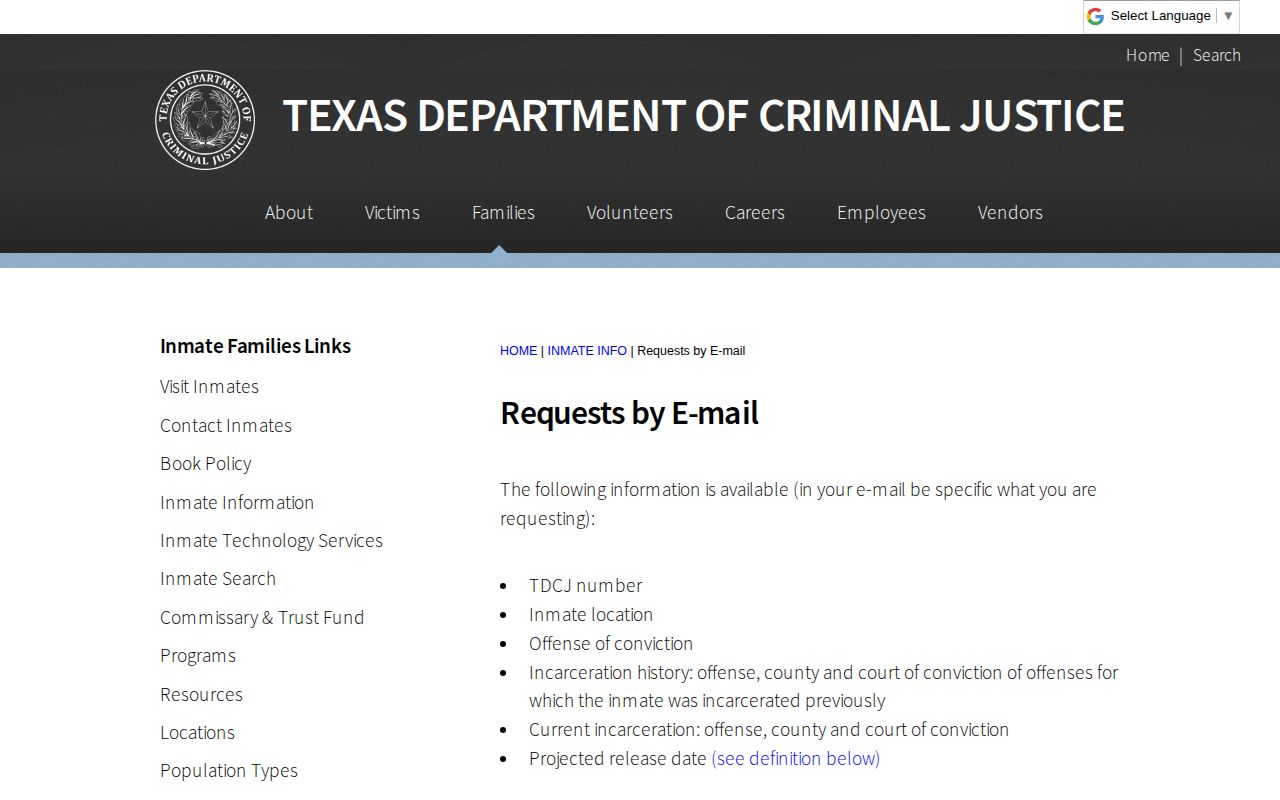
That distinction kills a common mistake in searches for Texas busted mugshots. A custody profile is not an image release. Asking TDCJ to release an existing departmental photo is one thing; asking the agency to build a public photo database is another.
TDCJ Photo Updates Are Not Public Posts
Photos inside TDCJ follow an internal schedule. The Offender Orientation Handbook spells out the rules. An offender approved to wear a religious beard gets photographed again after 30 days and receives a new identification card. Otherwise the ID photo is retaken each year. That annual shot lands in the offender's birthday month. Everything in this cycle serves departmental identification and nothing else. It does not create a public posting schedule, promise that a photograph will appear in IVSS, or promise that a request will return the newest image.
What the handbook describes is a departmental photograph, not a searchable public booking gallery. When the date or version of a photo matters, put the person and the specific image in writing. Be specific about what you want. Ask TDCJ what record it can release. The agency then applies whatever restrictions govern that item.
An internal photo cycle means nothing for county booking-photo timing. It says nothing about uploads to a public search or whether an older image stays attached to a later profile. Ask the agency to name the record it located. Ask for its date or description too. Custody details can be checked online. A photo's age, though, cannot be read from an IVSS result, and the public email statement still stands: inmate photographs will not be provided that way.
TDCJ Records vs County Busted Mugshots
A county booking photo and a TDCJ identification photo come from different worlds. One tracks local arrest intake. The other belongs to a state corrections record. Texas keeps these systems separate. A county release tells you nothing about the state file, and the state file tells you nothing about the county's photo.
| Question | County booking source | TDCJ source |
|---|---|---|
| Who is covered? | People booked by or held for a county or local agency, subject to that county's system. | People in TDCJ custody or listed in parole or mandatory supervision records. |
| What does it answer? | Whether a local booking or custody entry is available and what the agency recorded at intake. | Whether TDCJ has a custody or supervision record and related state corrections details. |
| Is a public photo shown? | It varies by county and interface. Some show a photo, some do not, and some require a records request. | IVSS does not operate as a public photo search; public email guidance says inmate photographs are not provided. |
| Where to start? | The relevant sheriff, jail, or arresting agency, routed through the county links. | The official IVSS search or a written TDCJ records request. |
No single Texas roster blends the two. Plenty of people get booked and released without ever reaching state prison. Plenty of TDCJ inmates carry older county cases too. Courts hold the answers there. For a local booking, start with the county and the arresting agency, then follow the route that agency publishes.
Find Older TDCJ Mugshots and Records
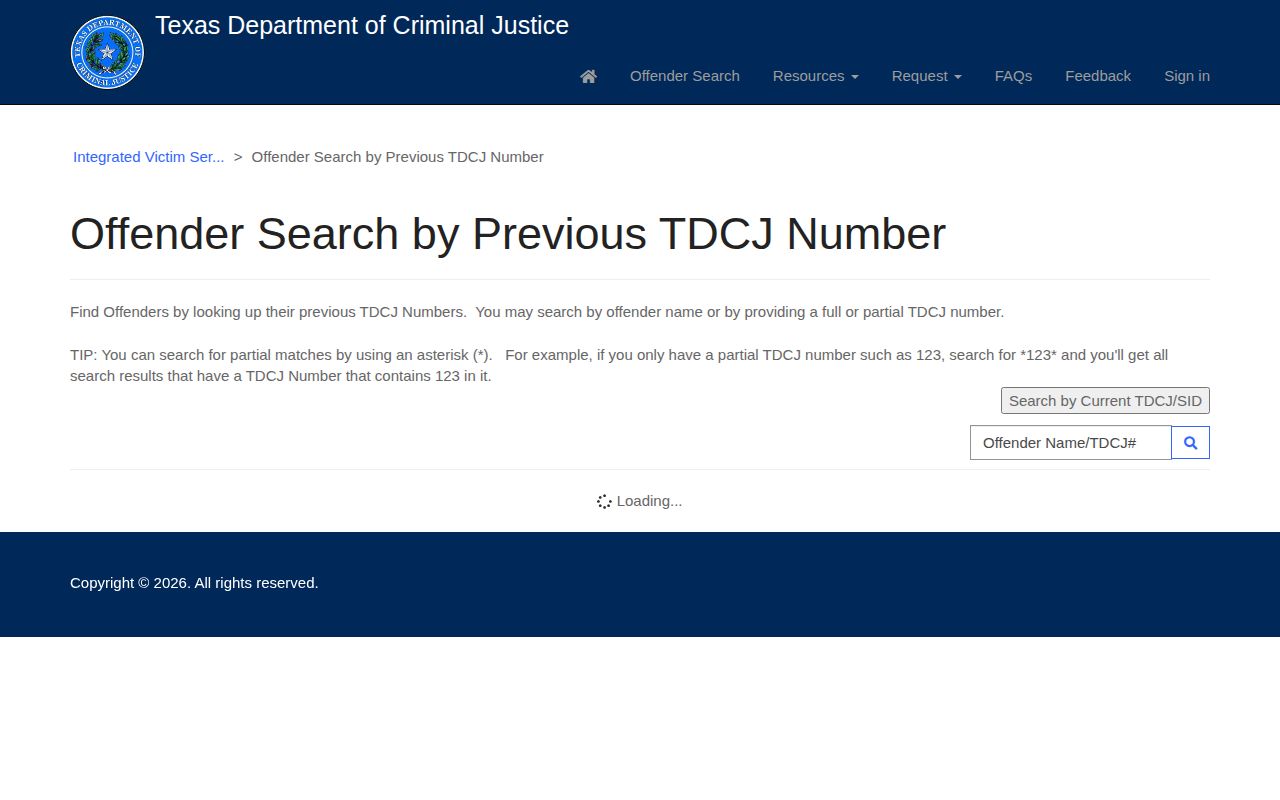
A failed search does not end the hunt. First test whether the number you hold is a former TDCJ number. TDCJ runs a separate previous-number search for exactly that. Extra details also help staff locate a record. The public email instructions mention the full name, the TDCJ number if known, exact date of birth or approximate age, and county of conviction. Incomplete details can point to the wrong person.
The TDCJ previous-number search covers that alternate identifier, though it never promises a photo will display. It is also not proof that every discharged person stays in IVSS. TDCJ makes no such promise. A missing profile has several explanations. The identifier may be incomplete, the person may fall outside public scope, or the record may need a written request. Never assume it was destroyed. Never assume no record exists.
Custody, parole, and mandatory supervision are three different TDCJ statuses. IVSS may keep someone visible while one of those listed relationships applies. It does not promise lifelong visibility after discharge. A missing name says nothing about a county case either. For older material, skip the guesswork and use the agency's written records process. Ask about the specific record by name.
Really old corrections material lives elsewhere. The Texas State Library and Archives Commission holds finding aids for Texas Department of Corrections photographs and related records. Those collections carry their own access conditions. They are not a live TDCJ roster. An archived prison ID photo should never be relabeled a county booking mugshot unless the record itself says so.
Request a TDCJ Mugshot Record
Written requests start on TDCJ's Public Information Request page. The agency accepts electronic submissions, email to PIA@tdcj.texas.gov, mail to the department in Huntsville, and hand delivery at its listed Austin office. Don't confuse the two email routes. An email asking for general inmate information follows a different path and will not produce a public photograph.
Describe the record with real detail. If the item is a departmental identification photograph, say so plainly and include the TDCJ number if you know it. Add the full name. Date of birth, approximate age, and county of conviction all help. Ask for an electronic copy if that works. Also ask TDCJ to cite the legal basis for any withholding or redaction.
- Identify the existing item, such as a departmental identification photograph for a named person or TDCJ number.
- Give matching details that help staff locate the right record, including a former number or conviction county if known.
- Send the request using one of the submission channels listed by TDCJ's public-information office.
- Review any estimate, clarification request, redaction, or notice that TDCJ seeks an Attorney General ruling.
- Keep the response and request date. If the photo is withheld, ask the agency to cite the exception and follow the review process stated in its response.
No fixed fee or deadline covers every TDCJ request. Costs can vary a great deal. The agency may send a cost estimate and add copy charges. It may also apply redactions. Or it may ask the Texas Attorney General for a ruling before releasing anything. Turnaround hinges on what records exist. It also hinges on how clearly the request describes them, and on whether an exception applies. One caution: silence from an online search does not deny a separate records request you file directly.
The agency's media policy treats one departmental identification photograph as a public record you can ask for. TDCJ still reviews each request on its own terms. Images or video that show identifiable inmates run into separate consent and policy limits. Keep the ask narrow. No records request can force TDCJ to build a statewide gallery. Nor can it certify what a photo proves.